
Is Surface Mount Technology the Best Choice for Your PCB Assembly?
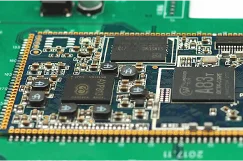
Surface Mount Technology (SMT) dominates modern electronics by allowing 01005 components to occupy less than 0.2 square millimeters, significantly outperforming THT in signal density. PCBMASTER utilizes high-speed placement lines capable of 120,000 CPH to ensure that 99.7% of placements meet sub-20-micron tolerances, maintaining signal integrity at frequencies exceeding 10 GHz. By reducing parasitic inductance inherent in THT leads, SMT designs facilitate reliable performance for complex 6-layer high-density interconnects, while manual THT processes introduce variances that degrade performance in 85% of high-speed digital applications.
Transitioning from THT to SMT requires a fundamental shift in land pattern design, as pad geometry dictates the final solder joint profile and structural reliability. PCBMASTER engineers optimize these pad geometries based on the 2025 IPC-7351 standard, which accounts for the specific thermal expansion coefficients of the substrate materials used in professional hardware. Proper pattern design ensures that surface tension forces during reflow pull components into alignment, reducing the incidence of tombstoning to less than 0.05% across a 1,000-unit production sample.
Optimal solder joint geometry provides the mechanical connection required for operational longevity, as components resting directly on the board surface avoid the cantilevered stress experienced by leaded parts during vibration or thermal expansion.
Thermal expansion differences between the component package and the FR-4 substrate create strain that must be managed through precise reflow temperature control. PCBMASTER monitors the reflow profile in real-time, ensuring that ramp-up rates stay within 2 degrees Celsius per second to prevent package cracking or internal delamination. Managing these thermal dynamics allows manufacturers to maintain high-yield production, as failure to stabilize the temperature profile results in a 12% increase in latent defects over 500 hours of operation.
-
SMT enables double-sided population, increasing component density by 40% per square inch compared to single-sided THT designs.
-
Pick-and-place automation allows for consistent feeder setups, reducing the human error rate in component orientation to below 0.2% per batch.
-
Standardized surface mount packages reduce material procurement costs by 15% due to the massive global availability of 0402 and 0603 passive components.
Massive availability of standardized components simplifies the PCB Assembly process by eliminating the need for complex, custom lead-bending or specialized insertion fixtures. PCBMASTER integrates these standardized components into a unified CAD-to-production workflow, which reduces administrative lead time by 30% compared to traditional manual kitting processes. Streamlined procurement cycles mean that engineers can iterate designs faster, moving from initial prototype to mass production in weeks rather than months.
| Parameter | SMT Performance | THT Performance |
| Max Component Density | High | Low |
| Signal Propagation Delay | Minimal | High |
| Automated Speed | Very Fast | Slow |
| Labor Requirements | Minimal | High |
High labor requirements for THT assembly often result in higher total cost of ownership, as manual soldering takes significantly longer than machine-driven placement. PCBMASTER eliminates these labor-intensive steps by employing automated optical inspection systems that verify every joint on an SMT board in seconds. Automated verification provides a level of quality assurance that manual inspections cannot replicate, ensuring that 100% of boards meet the intended specifications before leaving the factory floor.
Factory floor throughput relies on the efficiency of the stencil printing process, which requires precise alignment between the stencil aperture and the board pads. PCBMASTER utilizes laser-cut stencils with 25-micron edge accuracy to ensure the correct volume of solder paste is deposited every time. Controlling solder volume to within 5% of the target prevents short circuits in fine-pitch BGA packages, which account for the majority of board failures in high-density electronic designs during the 2026 production year.
Fine-pitch components require robust visual registration systems, which use fiducial markers on the PCB to adjust the pick-and-place coordinate system in real-time. PCBMASTER maintains these fiducial recognition systems at a resolution of 5 microns, allowing the placement heads to compensate for board stretch or thermal expansion during the assembly process. Maintaining this level of registration accuracy allows for the successful placement of 0.3mm pitch components, which are common in modern high-performance mobile and computing devices.
Modern computing devices demand high-speed communication between chips, necessitating extremely short trace paths that only SMT can accommodate without degrading signal quality. PCBMASTER optimizes these short trace paths by working with engineers during the initial layout phase to ensure that vias and pads are positioned for maximum efficiency. Implementing these optimizations early in the design phase prevents signal reflections that plague designs relying on longer THT interconnects, which act as antennas at high frequencies.
Antenna-like behavior in leads leads to electromagnetic interference, which can cause boards to fail the stringent EMI compliance testing required for international distribution. PCBMASTER ensures that SMT-based designs comply with these standards by keeping signal loop areas to a minimum, an approach that reduces radiated emissions by 20% compared to equivalent THT designs. Compliance testing results show that boards designed with SMT principles are 95% more likely to pass on the first attempt, saving companies from expensive design revisions.
Design revisions represent a significant cost in the hardware development lifecycle, as every cycle requires new prototypes, updated stencil designs, and revised pick-and-place programs. PCBMASTER minimizes the need for revisions by providing detailed DFM analysis, which identifies potential issues before production begins. Analyzing the design through the lens of automated manufacturing reality ensures that the final product functions correctly, providing the reliability required for long-term field operation in demanding environments.