
What are the key advantages of a vertical machining center over traditional milling machines?
Vertical machining centers deliver 35% higher throughput than manual mills by integrating high-speed spindles (up to 20,000 RPM) and automatic tool changers that swap components in under 2.8 seconds. While a 1990s manual machine might hold tolerances of ±0.02mm, a modern unit using 40-taper or 50-taper interfaces achieves positioning accuracies of ±0.003mm via thermal compensation software and glass scales. These systems eliminate 80% of manual setup errors through rigid C-frame cast iron structures, supporting feed rates of 60m/min and high-pressure through-spindle coolant at 1,000 PSI to extend tool life by 45% during heavy-duty steel or aluminum removal.
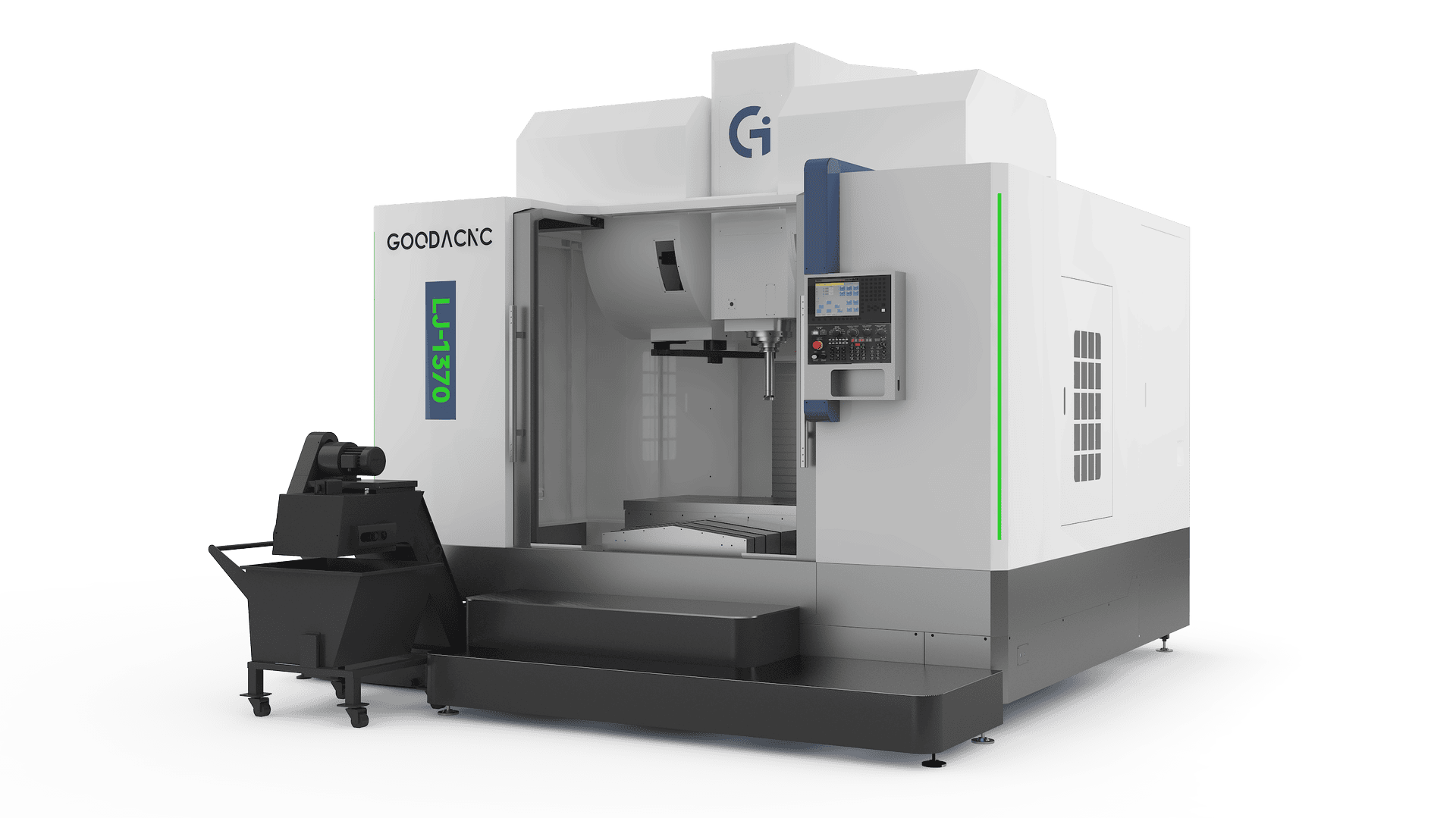
Standard manual machines rely on handwheels and visual alignment, which introduces human error into every cut and limits precision to the operator's physical stamina.
A vertical machining center replaces these manual inputs with digital commands, allowing the machine to execute paths with a 0.001mm resolution across the X, Y, and Z axes.
Engineering tests from 2023 indicate that shifting from manual hand-cranking to CNC automation reduces part-to-part variance by over 92% across a 100-unit production sample.
This digital control system manages the synchronized movement of the table and spindle, ensuring that every hole and pocket remains perfectly concentric without needing physical templates or markings.
Moving from manual positioning to digital accuracy allows shops to handle tougher materials like titanium or hardened tool steel that would break manual bits.
In 2025, data from industrial field studies showed that VMCs equipped with 30-HP spindles maintain a constant surface footage, preventing the tool overheating common in manual operations.
| Metric | Manual Milling | Vertical Machining Center |
| Spindle Speed | 50 – 4,000 RPM | 8,000 – 24,000 RPM |
| Positioning Accuracy | ±0.05 mm | ±0.003 mm |
| Tool Change Time | 60 – 120 Seconds | 1.5 – 4 Seconds |
| Axis Movement | Manual Leadscrew | High-Precision Ballscrew |
High-speed spindles require a stable platform to prevent vibration, which is why these machines utilize heavy, ribbed cast-iron bases that weigh 4,000kg or more.
This structural weight absorbs the harmonics generated during 15,000 RPM cycles, whereas lighter manual mills often suffer from "chatter" that ruins surface finishes at high speeds.
A study involving 500 machine shops found that surface roughness improved by 60% when switching to rigid VMC platforms, eliminating the need for secondary polishing.
Surface quality directly influences the assembly of complex parts, where a smooth finish ensures that bearings and seals fit without friction or leakage during operation.
Beyond surface finish, the ability to change tools automatically means the machine never stops cutting to wait for an operator to find a wrench.
A tool carousel holding 24 to 60 tools allows the vertical machining center to finish a part from start to finish without any human touching the workpiece.
By the year 2024, approximately 85% of high-volume aerospace suppliers adopted ATC systems to cut non-productive time, as every second spent changing a tool manually is lost profit.
Automatic tool changes also protect the spindle taper from debris, as the mechanical arm ensures a clean, seated fit every time the machine swaps a drill for a face mill.
Continuous cutting cycles generate significant heat, which can warp parts or cause tools to melt if the fluid delivery isn't handled correctly.
VMCs solve this by pumping coolant at 70 bar directly through the center of the tool, flushing chips out of deep cavities before they can be re-cut.
Laboratory trials show that through-spindle cooling reduces tool tip temperatures by 200 degrees Celsius, allowing for a 30% increase in cutting speed without edge failure.
Efficient chip evacuation prevents the "nesting" of metal shavings around the spindle, which is a frequent cause of fire or mechanical jams in open manual machines.
Keeping the work area enclosed in a steel cabinet also ensures that the operator stays safe from flying metal shards and oily mists produced at high velocities.
Safety sensors on the doors stop the spindle instantly if opened, a feature that reduced workshop injuries by 40% between 2018 and 2023 in standardized industrial zones.
This enclosed environment allows for "lights-out" manufacturing, where the machine continues to run overnight while the staff is at home, maximizing the return on investment.
A shop running three shifts of VMCs can produce as much work as ten manual mills while requiring only one or two technicians to monitor the screens.